Moisture Meters and Water Damage Restoration in Tampa
Why a dry surface is not the whole story
After a leak or a flood, a wall can look ordinary while water still sits in the gypsum, the studs, or the subfloor. Restoration crews use moisture meters because touch and sight miss that hidden water. A meter turns an invisible condition into a number a crew can compare from one day to the next. Homeowners who understand pin meters, pinless meters, and the limits of a thermal camera can follow the drying with clearer expectations.
Pin meters
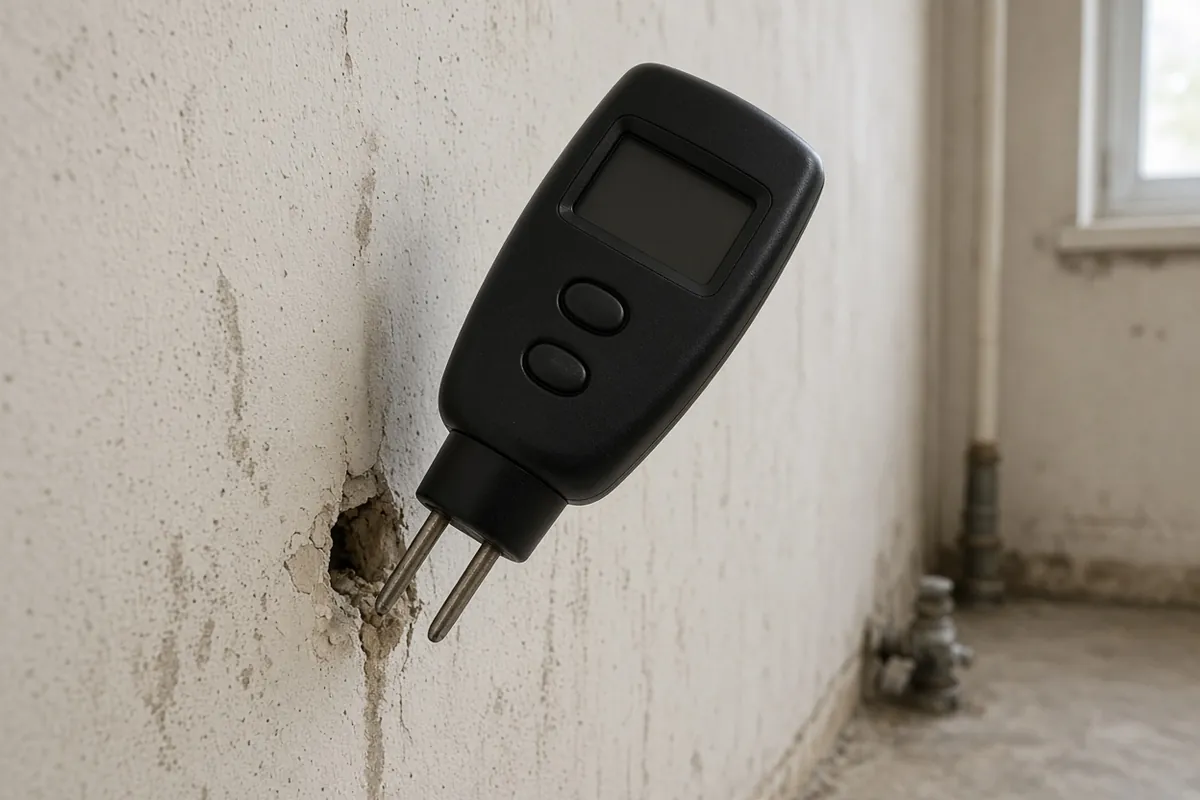
A pin meter has two metal pins. The user presses those pins into the material. The meter sends a small electrical current between the pins and measures resistance. Dry wood and dry gypsum resist that current. Water lowers the resistance, so the display rises as the material gets wetter. Because the pins reach a chosen depth, a crew can compare the face of a board with the core, or check a stud at a small inspection opening. Pins leave tiny holes and sample only the wood or gypsum between the tips.
Pinless meters
A pinless meter works without holes. A sensor pad sends an electromagnetic field into the material and reads how that field changes when moisture is present. The user slides the pad across drywall or a subfloor and watches the numbers move. These meters are fast for scanning large areas and for finding the edge of a wet zone. They read a shallow volume under the pad, not a single deep point. Metal corner bead, foil-backed insulation, wiring, and pipe can nudge the reading. Crews treat a high pinless scan as a reason to look closer, often with a pin meter at a few test points.
What the number means
A number means little until the user knows the material and the scale. Many meters offer a wood scale and a relative scale for drywall. Wood moisture content is the weight of water in the piece compared with the oven-dry weight of that same piece. Above the fiber saturation point, the cell walls hold all the water they can and extra water sits in the cell cavities. Below that point, wood takes on and gives off moisture until it settles near the humidity of the room. Gypsum readings are usually relative: this spot versus a dry spot of the same board. A technician checks an unaffected area of the same material and uses that dry reference when judging progress.
Thermal cameras are a hint
An infrared camera maps surface temperature. It does not measure water. Wet material can look cooler when water is evaporating, so a cool patch can hint that moisture is present. The same cool pattern can come from missing insulation, a draft, a shadow, or a cold pipe. Crews use the image to decide where to place the meter. Confirmation still comes from readings on the material itself.
Drywall, wood framing, and subfloors
Drywall
Paint and the face paper can feel dry while the core stays damp. A pinless scan across the wall shows the outline of the wet area. Pins can show whether moisture is only at the surface or deeper in the board. Seams, the bottom edge above a wet floor, and the area around an outlet are common holding spots, because water follows gravity and small gaps.
Wood framing
Studs, plates, and joists can wick water along the grain even after the room looks clean. End grain at the bottom plate drinks more readily than the face of a stud. Crews check the plate, the lowest inches of the studs, and any wood that sat in standing water. Insulation can hide a wet stud until someone meters the wood directly.
Subfloors
Plywood and oriented strand board often sit under finished flooring that already feels dry. A pinless meter on the finished floor can suggest a problem, but adhesives, vinyl, and tile change the signal. Where access exists from a crawl space or basement, pins in the subfloor give a clearer picture of the wood that must dry. Around tubs, toilets, and exterior doors, crews compare several points so one odd reading does not set the whole plan.
Why the surface fools the hand
Evaporation happens at the exposed face first. Indoor air, fans, and dehumidifiers strip moisture from that face, so paint feels normal. Behind the face, a cavity has less air movement. Insulation holds water, and vapor moves slowly through gypsum and wood. A resident can wipe a wall and feel nothing damp on the same day a meter still flags the cavity. That gap is why crews keep drying equipment in place after the odor fades and the floor looks ready for furniture.
Drying goals and daily readings
Drying goals follow the material and the house. The practical aim is to bring wet materials in line with similar dry materials in the same environment, and to see readings hold steady. Wood should move toward the moisture content it would reach at the room's humidity. Drywall should match the dry reference areas. Crews mark test spots and record them once a day with the same meter and the same mode.
- A falling trend means the assembly is giving up water.
- A flat reading well above the dry reference can mean trapped moisture, a missed layer, or a leak that is still active.
- A rebound after equipment stops suggests the drying reached only the surface.
Moisture, time, and mold risk
Mold needs moisture, a food source such as paper or wood, and time at ordinary indoor temperatures. The longer gypsum and framing stay wet, the more opportunity colonies have to establish. Stopping the water, drying wet materials, and removing items that stayed saturated and cannot be cleaned remain the practical steps. A moisture meter does not name a mold species. It shows where water remains so owners can remove the condition mold needs. Inspectors who use these tools often follow InterNACHI guidance on moisture meters, which covers what pin and pinless readings can and cannot show. When daily readings stay high and wet materials cannot be dried in place, a professional drying crew can open assemblies, set equipment, and keep a log of meter readings until the materials stabilize.